Thought Leadership and Curriculum Fail the Same Way
A white paper and a fifth-grade unit plan fail the same way: someone makes them, someone uses them, and no one ties what happened to the next decision. Schools at least get a test that shows the gap. Marketers have to build their own scoreboard.
Picture two shelves. One sits in a marketing department: research reports, e-books, last year’s blog posts. The other sits in a district office: unit plans, slide decks, worksheets, a companion guide for every chapter. Both shelves are full. On both, almost no one can tell you which piece moved anything.
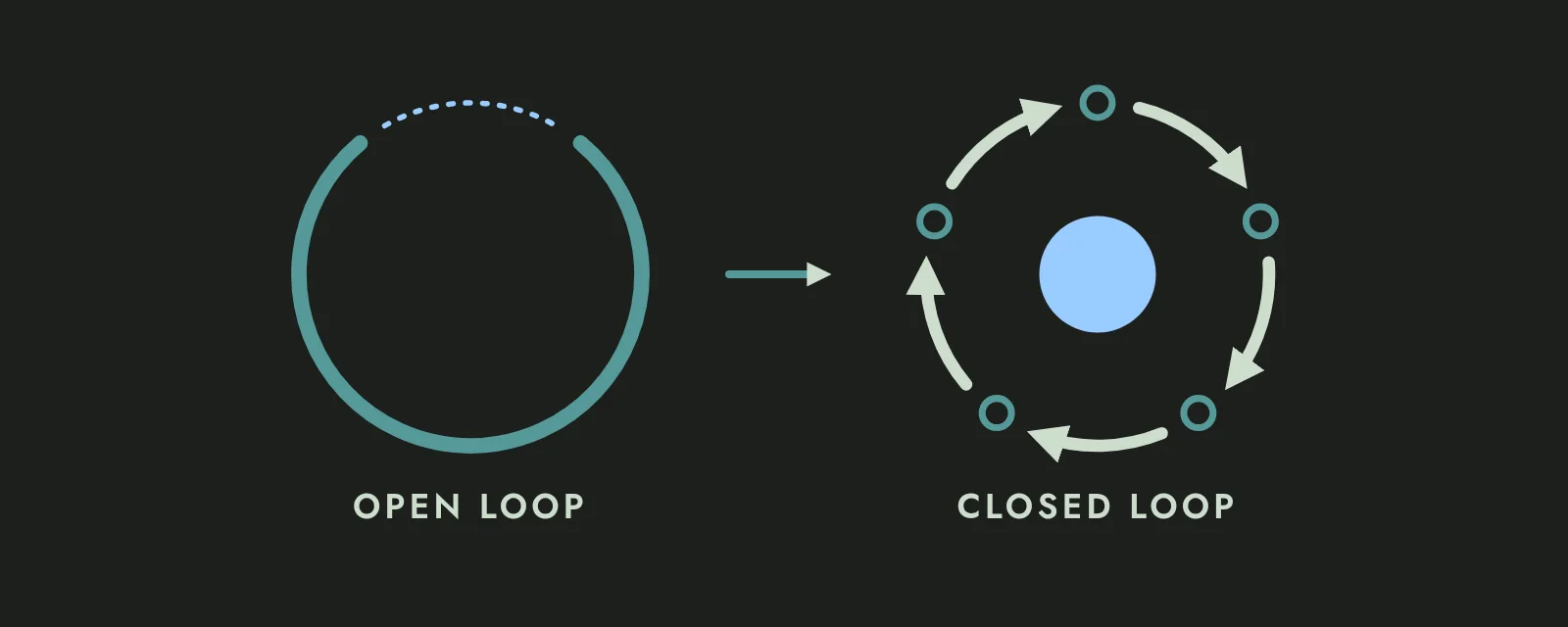
Large organizations don’t fail for lack of files, dashboards or chatbots. They fail because content sits in an open loop. Someone plans it. Someone publishes or teaches it. Maybe someone looks at a number. Then the why and the what happened next fall out, and the next cycle starts from zero.
Revenue is one form of performance. Student learning is another. The loop breaks the same way in both.
Why does content pile up without moving performance?
Because making content is a task, and closing the loop is nobody’s job.
Walk into any large marketing team and ask why the pricing e-book exists. Someone will find the file in seconds. The reason it was written, the deal it was meant to help and what happened to that deal walked out the door with the product marketer who wrote it. The file survived. The story didn’t.
The tools aren’t the problem. The problem is the gap between “we published it” and “here’s what it changed, and here’s what we’ll do next.”
Marketers say so themselves. In the Content Marketing Institute’s 2025 B2B benchmark research, only about half (51%) of marketers who measure content agreed their organization measures it effectively. More than half (56%) said they struggle to attribute ROI to content, and 44% named an inability to tie performance to business goals (CMI).
Where does the loop actually break?
At the same spot in both worlds: the hand-off from used to evidence, and from evidence to the next decision.
In business, thought leadership often never ties to a deal stage, a price, a segment or a clearer decision. It ships, it gets some traffic and it’s done.
In education, curriculum and companion materials often never tie cleanly to the standard, to how the class actually used them and to what students showed. That isn’t a knock on teachers. RAND’s survey of K–12 English, math and science teachers found that most mix and match: on average, they regularly use two curriculum materials and five supplemental ones. Nearly half use a curriculum material they made themselves, and nearly all modify what they’re given (RAND). Good teachers adapt. But the material in the room drifts from the material in the plan, and the reason for each change is easy to lose.
| Sector | The content | The performance that matters |
|---|---|---|
| Business | Thought leadership and marketing content | Revenue, pipeline, retained customers, clearer decisions |
| Education | Curriculum and companion materials | Student performance, and teachers who can teach the standard |
| Nonprofits | Mission and program content, not only fundraising appeals | Progress on the problem the organization exists to solve |
Did cheap generation fix it, or make the pile bigger?
It made the pile bigger.
About half of new English-language articles on the web are now primarily AI-generated, according to Graphite’s analysis of a random sample of web articles. That share has held near 50% since early 2025 (Graphite). Inside companies, the same thing happens to posts, PDFs and lesson drafts.
More drafts haven’t meant more results. In CMI’s research for 2026, among B2B marketers who use AI to create content, 87% said productivity improved, but only 39% said content performance improved. As CMI’s Robert Rose put it, for the most part AI “helps marketers type faster, not think better” (CMI).
Cheap drafts also make the hard part easier to skip. When a piece costs almost nothing, it’s tempting to publish first and maybe check the traffic later.
The scarce asset now isn’t the draft. It’s the living record: why you made the piece, what happened when people used it and what you decided next. That record is what makes the next cycle smarter than the last one.
What does “close the loop” mean?
Closing the loop means every piece of content has a job, a way to see whether it did that job, and a decision that comes out the other side.
The cycle is the same for a white paper and a unit plan:
- Intend. Name what this piece should change.
- Use. Publish it, send it, teach it.
- Evidence. See what happened, in terms of the job you named.
- Decide. Keep it, revise it or kill it.
- Next cycle. Start the next piece from what you learned, with the why attached.
People approve each turn of the loop. Software, including AI, can help: it can connect what you decided to what happened next, find the gaps and draft the next step. A person still signs off.
The cycle is shared. What counts as evidence is not equally easy to find. That’s where education and business split.
Why do schools have it easier, and how can business catch up?
Schools are handed a scoreboard every spring. Business can catch up, but it has to build its own scoreboard into the content job.
Education inherits a scoreboard. U.S. states must test students in reading and math every year in grades 3 through 8 and at least once in high school (34 CFR § 200.5). You can argue about any test. But the evidence shows up on a schedule, it’s tied to a standard and everyone knows when it’s coming. Closing the loop in a school means tying curriculum and companion materials to that evidence and to the next instructional decision.
Business has no test for a white paper. No one grades your research report in May. So closing the loop means designing the scoreboard into the content job, before you publish. Three steps:
- Name the performance job before you write. Advance this deal stage. Defend this price. Create demand in this segment. Arm this sales conversation. Shorten this decision. If a piece has no job, there’s nothing to close.
- Attach evidence that isn’t vanity. Pipeline the piece touched. Win/loss interviews where buyers repeat the argument. How often sales actually sends it. The quality of the enquiries it brings. Prices that held. Time to decision. Results from tests of topic, headline and format. Pageviews alone leave the loop open.
- Keep the why, and decide next. Write down why you made this claim and chose this angle, what the evidence showed and what you’ll publish, revise or kill next.
Engagement is still the default scoreboard. CMI’s 2026 research found that 80% of B2B marketers measure thought leadership by views, downloads and shares. Only 63% track business impact, like leads and pipeline (CMI).
Be honest about the limit. Business evidence is noisier. One article is not a grade, and pretending it maps neatly to revenue is its own kind of open loop. The loop closes at the level of the program and the job, not one piece and one dollar.
| Education | Business thought leadership | |
|---|---|---|
| Scoreboard | Inherited: students take tests on a schedule | Designed: no shared test for a white paper |
| How the loop closes | Tie curriculum and companions to standards, class use and student evidence; keep the why | Name the job before publishing; attach non-vanity evidence; keep the why; decide next |
| What happens when it’s skipped | Materials drift away from the standard and the evidence | Teams ship, watch traffic and call it done |
How do you build content that closes the loop?
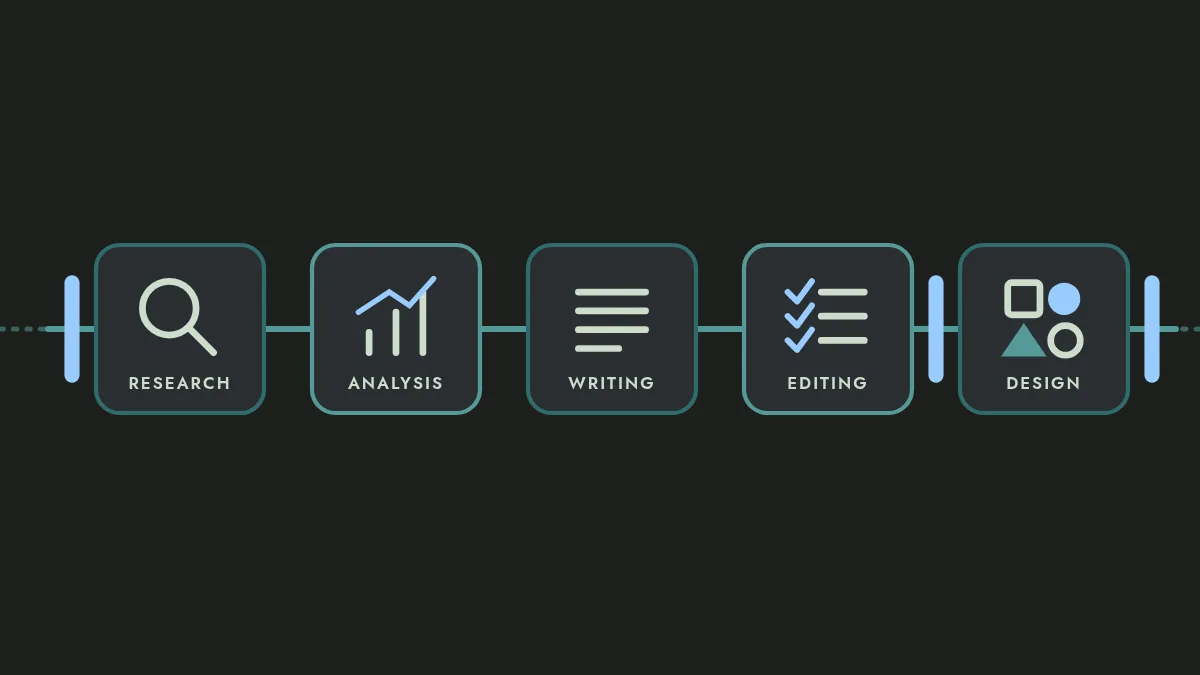
Run the making of content through the same loop: brief, research and produce, package, measure what moved performance, improve.
Package means more than the article. It means the long piece plus the short cuts people actually share (pull quotes, posts, a table, a diagram), so the idea travels to the readers who will never open the full piece. Those readers matter: Edelman and LinkedIn found that 57% of hidden buyers prefer quick takeaways over dense reports (Edelman).
The domain expert stays in the middle at three points: approving the brief, signing off on every claim and approving what gets published. The goal is content that is effective: persuasive, interesting and easy to read.
Speed, cost and search optimization make the loop practical. They aren’t the point. A fast process that produces pieces with no job just fills the shelf faster.
For how to staff that work with AI and keep the expert in charge, see Stop Asking AI for a Draft. Staff It Like a Content Team.
What does closed-loop thought leadership look like in business?
It looks like content with a job, and a team that builds its own scoreboard instead of waiting for a test that will never come.
Start with what buyers do. In the 2025 Edelman-LinkedIn B2B Thought Leadership Impact Report, Edelman describes “hidden buyers”: the finance, legal, compliance, procurement and operations people who shape deals without sitting in the sales meeting. 71% said they have little or no interaction with sales teams. 95% said strong thought leadership makes them more receptive to sales and marketing outreach. And 79% said they’re more likely to advocate for a proposal during an RFP when the vendor consistently produces high-quality thought leadership (Edelman).
That gives you a job you can name: arm the person who isn’t in the meeting. And it gives you evidence to look for: does the argument show up in RFP responses, in the questions finance asks, in win/loss interviews?
Then make each piece learn from the last. Test topics, headlines and formats so the next piece starts smarter (testing). Make the case on value, so the content defends price instead of inviting a discount (win on value). Write for one industry at a time, because specific beats general (industry-specific content).
I’ve worked in marketing for 35 years, since 1991. No one handed us a test. The work that moved the most had a clear job and a way to see whether it did that job:
- Dell. The consumer program I led generated more than $1.5 billion in annual revenue for Dell.
- Harrah’s. Working in partnership with Polaris Research, we used marketing mix modeling to cut more than $30 million a year from marketing spend at a single Harrah’s property, with performance maintained.
- D Custom. Where I was president from 2014 to 2024, revenue doubled and client work earned more than 60 national awards. Not by publishing more, but by having something specific to say.
That’s the growth work I do through PMB and Berry Buckley: decide what each piece is for, then build the scoreboard that shows whether it worked.
What does closed-loop curriculum look like in education?
It looks like curriculum, companion materials, student evidence and a living record, working as one loop.
The scoreboard here is student performance, not revenue. And the tests that schools already give are the reason this lane feels clearer. The work is connecting what you teach to what students show, and remembering why you changed course.
The pattern has three steps:
- Find the gaps. Compare what the curriculum intends with what students actually show.
- Fill them with companion materials. Build materials aimed at those gaps, not one more generic worksheet.
- Keep the why in a living record. Write down what you changed, why and what happened, so next year’s team starts from what this year’s team learned.
School and district support matters here. RAND found that teachers were less likely to substantially modify their materials, or create their own, when school and district policies and principal supports were in place (RAND).
That’s the pattern behind Nvitis Education, where I serve as Chief Marketing Officer. Nvitis builds an institutional memory and context layer: a living record that keeps the why attached to the work, so it doesn’t leave when people do.
Does this work for nonprofits?
Briefly: fundraising content and mission content run on different loops.
A fundraising appeal has a clear scoreboard: gifts. Mission content (program guides, training, reports on the work itself) needs its own: did the program help the people it serves, and what will you change next? Closing that loop means program, then evidence from the people served, then the next program decision. Fundraising usually has its scoreboard. The opportunity is to give the mission one too.
What should you say instead of “data-driven” and vague “AI”?
Words that describe the loop, not words that decorate it.
| Instead of | Say |
|---|---|
| “We’re data-driven” | “We tie evidence to the next decision” |
| “Our AI platform” | “Software that connects what we decided to what happened next, finds gaps and drafts the next step for a person to approve” |
| “Knowledge management” | “A living record that keeps the why” |
| “Align content to goals” | “Name the deal stage this piece should advance” |
| “Look at the traffic” | “Did the piece do its job?” |
Plain words force a plain question: what was this piece supposed to change?
Close the loop before you write the next piece
Schools got their scoreboard handed to them. Yours starts as a blank line at the top of the brief: This piece will… Fill it in before anyone writes a word.
If you want help naming the jobs and building the scoreboard, work with me.
The next piece you publish will either teach you something or join the shelf. You get to decide which before you write it.